Physical Address
304 North Cardinal St.
Dorchester Center, MA 02124
Physical Address
304 North Cardinal St.
Dorchester Center, MA 02124

Where self-care meets the snooze button
Where self-care meets the snooze button

Self-improvement shouldn’t feel like a second job. When you step back from the hustle, the real clarity finally shows up.

There comes a moment in every woman’s life where she’s just…over it.
Not in a dramatic, flip-a-table kind of way. More like: “If one more person tells me to ‘optimize my morning routine,’ I’m going to lay down on the floor and never get up again.”
You know the feeling. We all do.
At some point, the journey to “self-improvement” stops feeling nourishing and starts feeling like a full-time job. A job nobody pays you for, by the way.
And if you’ve been living in survival mode, burnout mode, or “barely holding it together” mode for longer than you’d like to admit… then fixing yourself starts to feel like another chore you’re failing at.
But here’s the truth nobody says out loud: you don’t need another wellness overhaul. You don’t need stricter routines or more discipline or a new version of yourself to chase. What you actually need is ease. You need softness. You need a break from carrying everything like it’s a personal test you have to pass. Most of us aren’t struggling because we’re lazy; we’re struggling because we’re exhausted.
This is where the art of doing less comes in. To me, doing less isn’t avoidance and it isn’t failure—it’s a rebellion against the idea that your worth is tied to constant effort. It’s a reclamation of your time, your energy, and your humanity. It’s choosing to stop treating yourself like a project and start treating yourself like a person again. In its simplest form, doing less becomes a way back to yourself.
Somewhere along the line, we started treating ourselves like broken devices:
“New personality update available.”
“Patch your childhood wounds.”
“Fix your procrastination bug.”
“Reinstall confidence 2.0.”
No wonder you’re tired.
You were never meant to be a system constantly monitored for performance improvements. And really, what’s the point? You’ll never reach some mythical “top level” of self-improvement. There will always be someone you perceive as having more—more discipline, more money, more opportunity, more contentment. Comparison is the thief of joy because it’s a game you cannot win.
Striving for goodness or better-ness in your life is fine, even healthy, but it’s important to remember that the actual point of life is simply to live it. There is no performance review waiting for you at the end. There is no handbook you’re supposed to have mastered by now.
You’re not falling behind; you’re doing just as well as everyone else who is also figuring it out in real time. It’s everyone else’s first time on Earth, too. Your worth was never meant to be performance-based, and it certainly isn’t something you have to earn by constantly upgrading yourself. What if the real healing begins when you finally stop trying to optimize every version of yourself and start allowing yourself to just be?
A lot of what we call “laziness” is actually:
Your body isn’t betraying you—it’s forcing relief. That afternoon crash that feels like your soul is trying to escape your body isn’t weakness; it’s your system whispering, “Okay, I’ve had enough for now.”
We tend to treat these signals like inconveniences or personal flaws, but they’re actually invitations. Your body is asking you to slow down, to reset, to stop pushing yourself past the point of depletion as if you’re made of endless battery life.
Doing less isn’t failure; it’s listening. It’s choosing to respond instead of ignore. It’s learning to make peace with the pace your body genuinely needs, not the pace you feel pressured to maintain. When you honor that rhythm, you move out of survival mode and into something softer and more sustainable—something that feels like actual living instead of constant endurance.
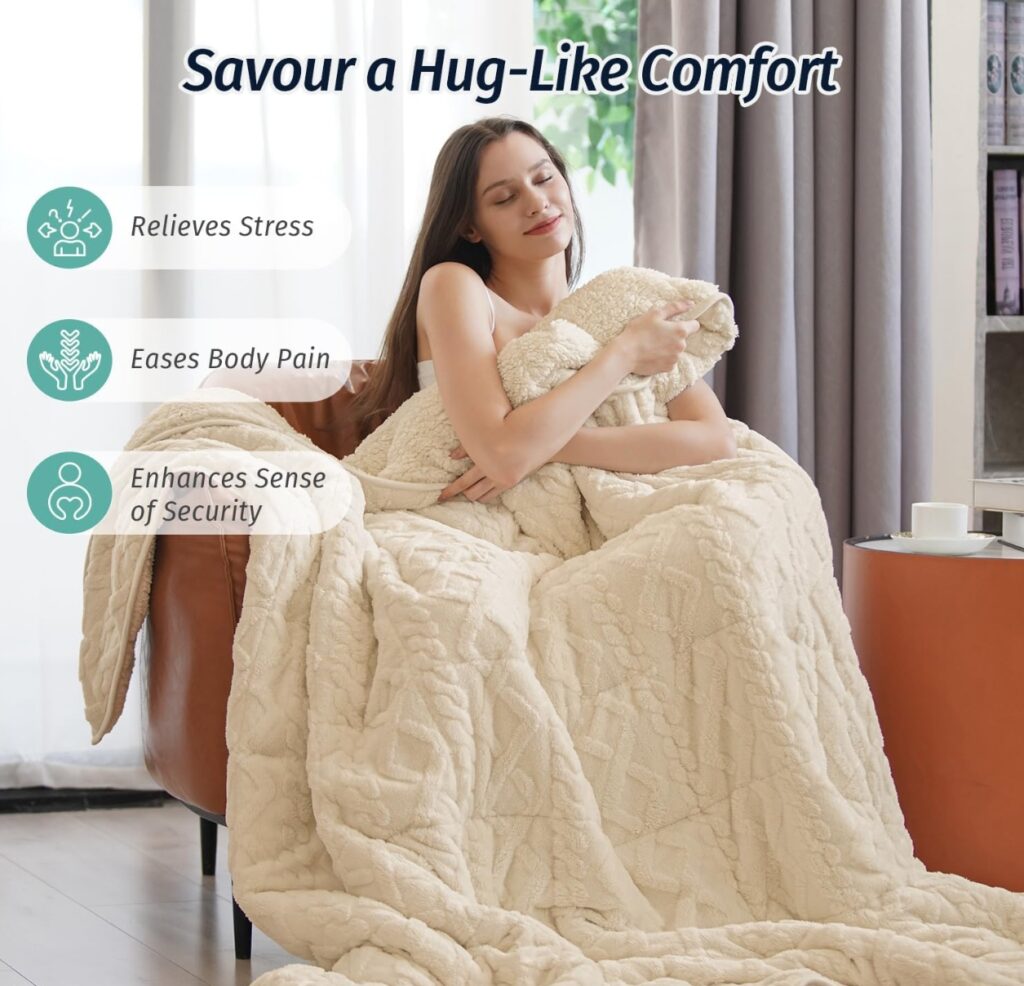
(Sorry for the ad. I just really love this weighted blanket, and you might love it too. It was gifted to me by a loved one and it has been a game changer in managing anxiety.)
We’ve been lied to.
We were told that effort equals worth. That struggle equals virtue. That if you’re not exhausted, you’re not doing enough.
But what if ease doesn’t make you weak, it makes you resilient?
Ease creates:
Have you ever heard the old saying: “Slow is smooth, smooth is fast?”
Efficiency doesn’t come from pushing harder.
It comes from clearing the noise, lowering the pressure, and giving your mind and body space to make functional decisions.
The quickest way to reach your wellness goals is not by implementing the perfect 5am morning routine (collective gasp from the audience). De-escalating your mind and body and prioritizing rest is actually much more productive for your nervous system, and in turn, will give you more energy for the goals that are actually important to you.
Doing less doesn’t mean doing nothing. It means choosing the smallest, most compassionate thing that moves you forward without draining your soul.
A gentle reset can look like:
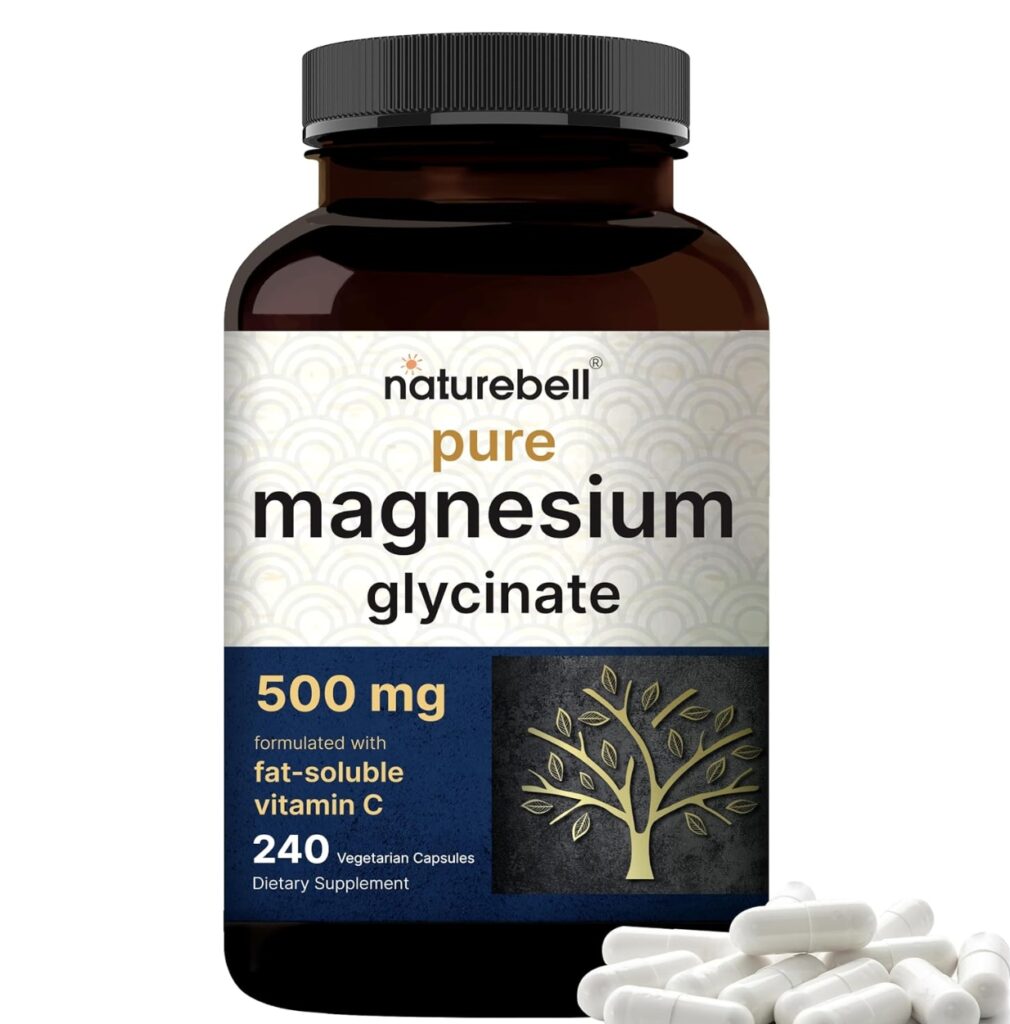
I’ve mentioned this magnesium supplement before, and I will keep screaming out it from the rooftops. Magnesium helps your muscles and nervous system relax, making it easier to fall (and stay) asleep. It helps anxiety by calming the “fight or flight” chemicals in your brain. It also reduces muscle tension, improves digestion, and helps with PMS.
It’s not about changing your whole life.
It’s about making life feel easy because it can be.
Here’s the real magic: when you stop micromanaging your healing, you finally create room to notice who you actually are.
Instead of obsessing over what needs to be fixed, you start discovering your natural rhythms: the way your energy rises and falls, the habits that genuinely nourish you, the signals your body has been trying to send for years. You hear your intuition again. You stop abandoning yourself in the name of constant improvement.
And slowly, without force or pressure, you grow. Not because you’re chasing some perfected version of yourself, but because you’ve made space for growth to happen on its own terms. When you stop trying to command every aspect of your evolution, you’re able to pause long enough to learn what your body truly needs. Healing becomes less about controlling the process and more about allowing it.
Doing less isn’t a retreat from your life; it’s a return to it. It’s choosing compassion over criticism, gentleness over hustle, and simplicity over self-punishment. When you stop overwhelming yourself with pressure and constant self-analysis, you finally make room to understand what your mind and body are actually asking for. Instead of pushing through every moment, you learn to move with yourself rather than against yourself, and life starts feeling more aligned and less like a battle.
You don’t need to fix yourself. You need to support yourself. Sometimes that support looks like slowing down, removing a few unnecessary expectations, and trusting that ease is a valid path forward. Doing less doesn’t strip you of ambition or progress; it simply allows you to grow without burning out. When you give yourself permission to soften the pace, you become more grounded, more present, and more connected to the version of you that’s been waiting to breathe again.
You become your true self.
If you’re tired, if you’re overwhelmed, if you feel like you can’t keep up, nothing is broken. I feel like that every day. A lot of people do.
It just means your mind and body are asking for a gentler path than the one you’ve been forcing yourself to follow. Healing isn’t always loud or dramatic; sometimes it looks like small decisions that make your day feel lighter, or choosing to support yourself rather than critique yourself. When you release the pressure to constantly fix or improve, you create space to notice the version of you that’s already growing beneath the noise.
Doing less isn’t giving up on who you want to become—it’s giving yourself room to arrive there without burning out. You don’t need to hustle your way into worthiness or perfect your way into peace. You are allowed to soften, to slow down, and to let your life feel easier than it used to. And maybe, once the pressure fades, you’ll realize the woman you’ve been working so hard to become has been within reach all along. She just needed a little room to breathe.